Insights & Updates
Armed vs. Unarmed Security: Which Does Your Business Need — Choosing the Right Officer

Armed vs. Unarmed Security: Which Does Your Business Need — Overview
Armed vs. unarmed security: which does your business need? The answer depends on several factors, including your industry, risk profile, location, and company culture. The right choice requires understanding what each option provides and what each option does not.
The question clients ask most
Prospective clients often ask whether they need armed or unarmed security officers. The decision is not about preference but about matching the officer to the risk the property carries, and that starts with an honest assessment rather than a default answer.
Match the officer to risk
The decision follows the risk profile, not a preference.
What each option does well
Unarmed officers are the most common and versatile solution, while armed officers add a layer of protection for higher-risk environments. Understanding where each is strongest is what makes the choice defensible if conditions or budgets change later.
Different tools, different jobs
Each option is strongest in a different environment.
Why the choice matters
The choice affects cost, training, insurance, and the way staff and customers experience the property. Getting it right protects people and assets, while getting it wrong can add cost without adding protection.
Cost, training, and perception
The choice shapes cost, training, and how the property feels.
What Unarmed Security Guards Provide
Unarmed officers are the most common and versatile security solution, and for many properties they are the right first option.
Visible deterrence and customer service
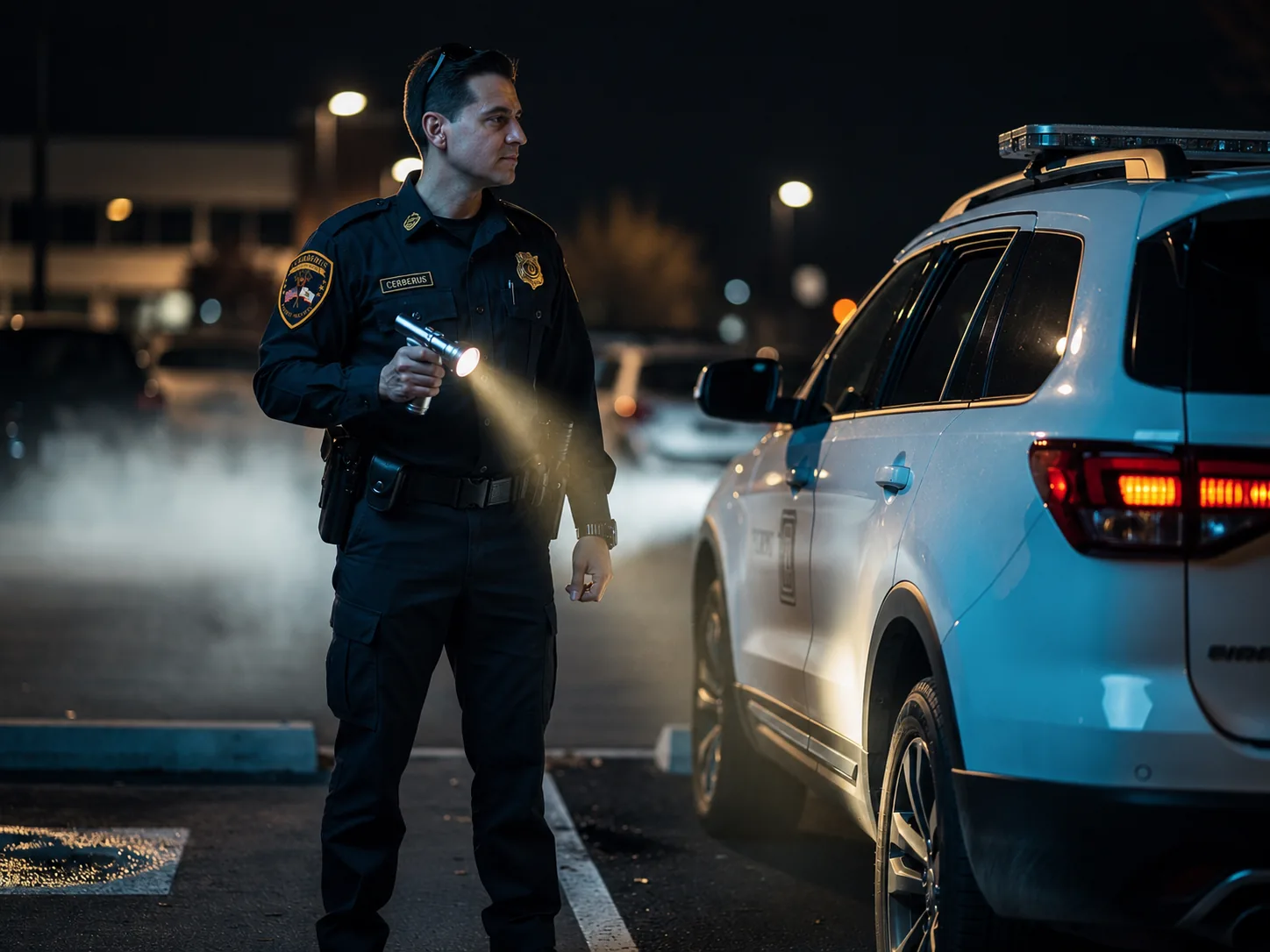
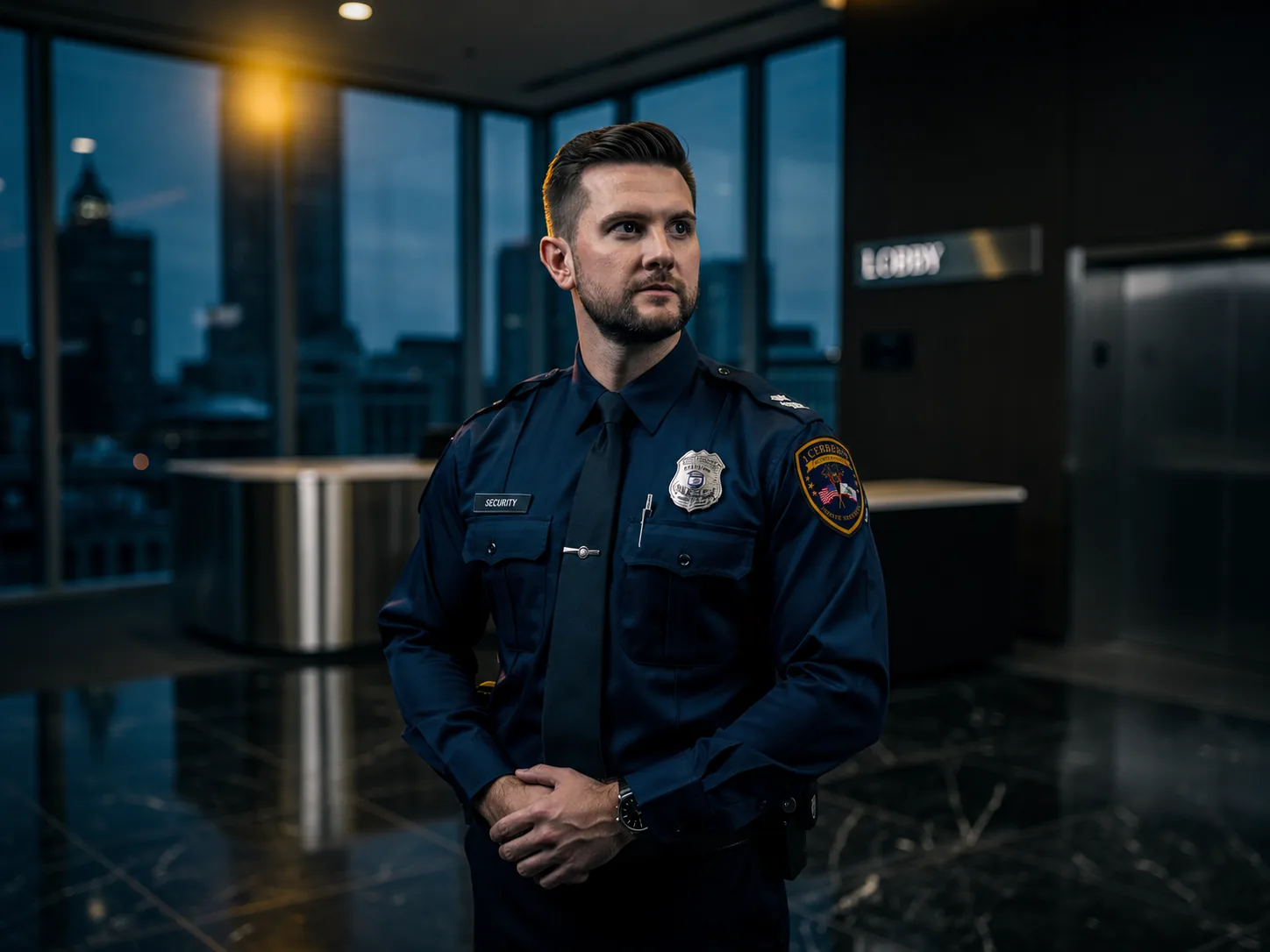
Unarmed officers are the most common and versatile security solution. Their uniformed presence alone is a strong deterrent, because most offenders are opportunists who look for easy targets. Seeing a professional officer on patrol often sends them elsewhere, and unarmed officers also excel at customer service, greeting visitors, managing access control, and providing directions.
The friendly face of safety
A visible officer deters opportunists and welcomes legitimate visitors.
Where unarmed guards fit best
Unarmed officers suit corporate offices, retail stores, hotels, and educational campuses, where a customer-facing presence that welcomes visitors matters more than an intimidating one. They are trained in observation, de-escalation, and emergency communication, and they can still intervene and detain within legal limits when needed.
Comfortable and capable
They fit customer-facing sites while still able to intervene within the law.
Cost and flexibility
Unarmed security generally costs less than armed security, which makes it practical for broad coverage such as a lobby post, a gate, or a patrol route. For many properties it delivers the visible presence that changes how a site is assessed from the outside.
Broader coverage per budget
Lower cost allows coverage across more posts and hours.
What Armed Security Guards Provide
Armed officers add a layer of protection for higher-risk environments, and they require a clear use-of-force policy.
Maximum deterrence for elevated risk
Armed officers add a layer of protection for higher-risk environments, and they are appropriate when the threat level justifies a lethal-force capability. These officers hold BSIS firearms permits in addition to their guard cards, and they undergo rigorous screening, psychological evaluation, and ongoing requalification.
A higher tier of protection
Armed coverage suits environments with a credible elevated threat.
Where armed guards fit best
Armed officers suit banks, jewelry stores, cannabis dispensaries, sites with large amounts of cash or high-value merchandise, and locations where a threat assessment shows a credible risk of armed confrontation. They create the strongest possible deterrent against armed robbery and violent crime, and they require close management coordination.
When the risk justifies it
Cash, valuables, and credible armed risk point to armed coverage.
How to Decide on Armed vs. Unarmed Security: Which Does Your Business Need
Start by assessing your actual risk, then consider your company culture and whether a hybrid approach fits.
Assess your actual risk
Has the business seen armed robbery, or have similar businesses nearby? Does it handle cash, precious metals, or pharmaceuticals, or hold other high-value assets that make it a target? What does the insurance provider require or recommend? The answers shape the choice far more than a general preference.
Facts before preference
Incident history, assets, and insurance needs drive the answer.
Consider culture and a hybrid approach
Consider company culture: would an armed presence alarm employees or customers, or would it give them peace of mind? Many businesses find a hybrid approach works best, using unarmed officers for daily operations and customer-facing roles and armed officers for after-hours coverage, cash handling, or high-risk locations. A professional security consultation can help find the right mix for the situation and budget.
Often a mix works best
Many sites combine unarmed daytime posts with armed high-risk coverage.
Why California Businesses Choose 1 Cerberus for Armed and Unarmed Security
A licensed provider can supply either officer type and help match the mix to the property.
Licensed officers for every post
1 Cerberus is a licensed PPO 121682 and fully insured. Every officer holds a valid BSIS guard card, and armed officers hold the required firearms permits, so the property can verify the credentials of the officers assigned to it.
Credentials you can check
Guard cards and firearms permits are verifiable.
A recommendation built on your risk
We help clients decide between armed and unarmed officers based on the property, the industry, and the actual threat, and we adjust the mix as conditions change. The goal is the right level of protection without paying for capability the site does not need.
Right-sized protection
The mix is built around the risk and adjusted over time.
Armed vs. Unarmed Security FAQ
Answers to the questions clients ask most often when comparing the two options.
What is the difference between armed and unarmed security guards?
Unarmed officers carry no firearm and rely on presence, observation, and de-escalation. Armed officers hold a BSIS firearms permit and add a lethal-force capability for higher-risk environments, with additional screening and requalification.
In short
Armed officers carry a firearm under a BSIS permit; unarmed officers rely on presence and de-escalation.
Do most businesses need armed security?
No. Most use unarmed officers. Armed coverage is appropriate only when a documented risk assessment shows the threat level justifies it.
In short
Most do not; armed follows a documented risk assessment.
Are armed guards more expensive?
Yes. The higher cost reflects additional training, licensing, insurance, and liability, and it should be matched to a genuine risk rather than added by default.
In short
Yes, and the cost should match a real risk.
Can unarmed guards detain someone?
Within legal limits and their training, yes. Serious situations are escalated to law enforcement, and procedures should be written into the security plan.
In short
Yes, within the law; serious situations go to police.
What is a hybrid security approach?
A hybrid approach pairs unarmed officers for daily, customer-facing work with armed officers for after-hours coverage, cash handling, or high-risk locations. Many properties find this balances protection and cost.
In short
Unarmed by day, armed for high-risk posts and hours.
How do I choose between them?
Assess your risk, review what your industry and insurance require, and consider your company culture. A professional consultation can recommend the right mix for your situation and budget.
In short
Assess risk, check requirements and culture, then consult a provider.