Industry Security
Commercial Property Security Services in California
Parking, tenant, and after-hours coverage for shopping centers and commercial buildings
- 24/7Coverage
- PPO 121682BSIS Licensed
- CAStatewide
Industry Details
Commercial Property Security Overview
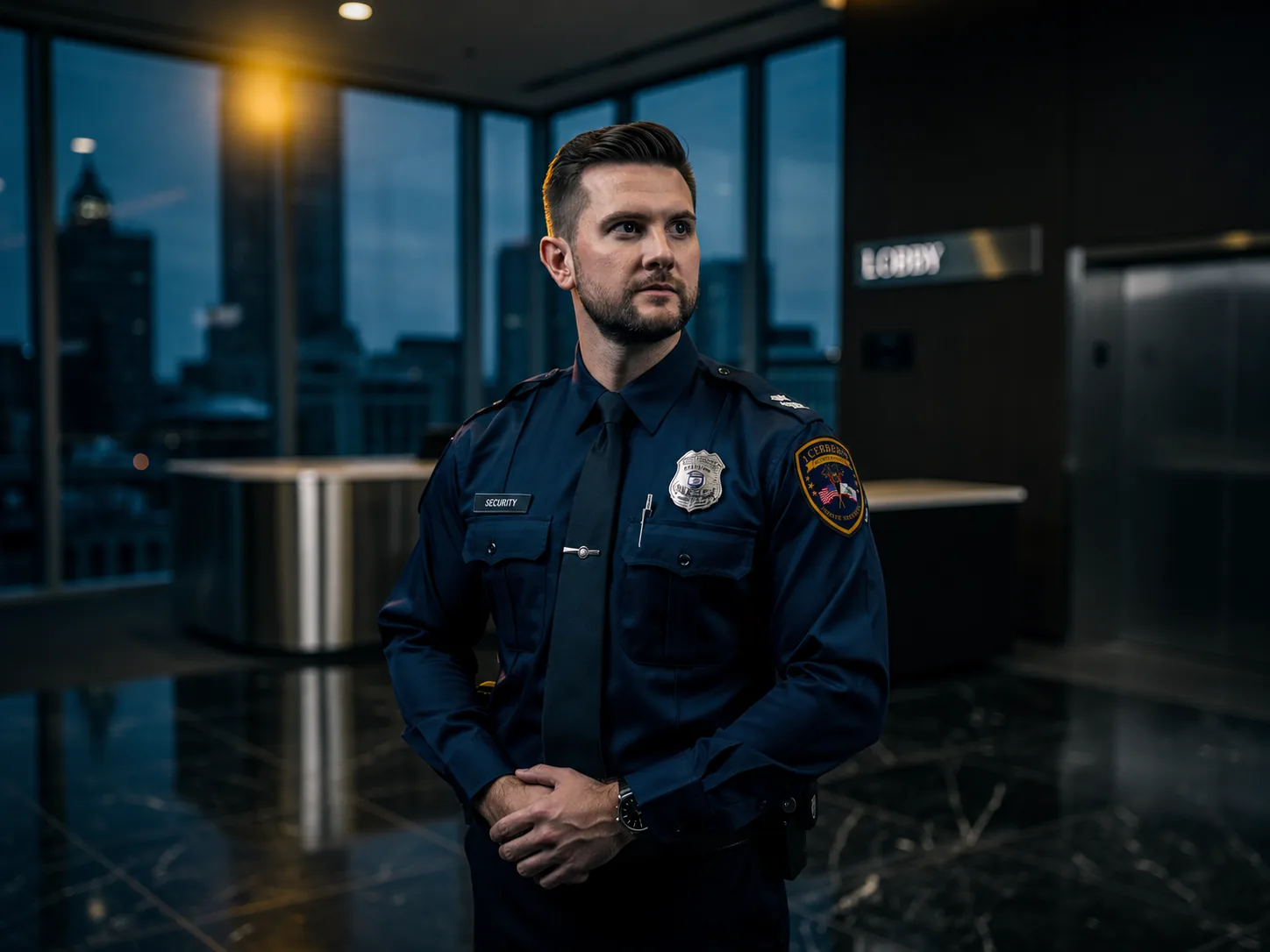
Our commercial property security services protect shopping centers, office parks, and mixed-use buildings where shared entrances, parking, and multiple tenants create complex risk. Officers patrol parking areas and common spaces, support tenant move-ins and closing procedures, and respond to disturbances and after-hours alarms. Their presence deters loitering, vandalism, and vehicle break-ins across the property.
What commercial property security covers
Commercial property security is guard and patrol coverage for shopping centers, office parks, mixed-use buildings, and other commercial properties. Officers patrol parking areas, monitor shared entrances, coordinate with tenants, perform closing checks, and respond to after-hours issues across the whole site.
Why one team beats scattered coverage
A property with many tenants needs a single team that knows the whole site. One consistent security presence gives management and tenants a familiar point of contact instead of a rotating mix of vendors.
Who we protect in this sector
We protect retail centers, office parks, medical and professional buildings, and mixed-use developments with retail below and offices or residences above. Each property has a different tenant mix and traffic pattern, so coverage follows the site.
Matching officers to the property
Post orders reflect each tenant's hours, vendor rules, and closing procedures, so officers support the businesses without disrupting them.
How coverage is structured
Coverage can be a daytime presence, an overnight post, roving patrol, or a blend of all three. A commercial property security services plan is scoped to the buildings, parking, and hours that carry the most risk.
Daytime presence and overnight patrol
Daytime officers support tenants and visitors, while overnight patrol covers parking and common areas when the property is quiet and lightly watched.
Commercial Property Security Risks We Address
Commercial property security services target the complaints that fill a manager's inbox: vehicle break-ins, loitering, unsecured tenant doors, and after-hours disturbances.
Vehicle break-ins and theft
Parking lots and structures are where most commercial crime begins. Officers patrol on a documented schedule, watch for vehicles left overnight, and report damage or suspicious activity.
Parking-structure coverage
Multi-level structures hide activity from the street, so officers walk levels and stairwells rather than relying on a single pass.
Loitering and trespassing
Unwanted visitors deter customers and tenants. Officers move loiterers along courteously and keep a record of repeat activity.
After-hours intrusion
Empty offices and service corridors attract intruders, so officers check doors and common areas after closing.
Unsecured tenant doors and vandalism
A door left open after hours is an invitation. Officers check suite and exterior doors, report damage, and document every issue for management.
Dumping, graffiti, and lighting gaps
Trash dumping, graffiti, and dark corners make a property feel unsafe, and officers report them so they are fixed.
Commercial Property Security Access Control
Commercial property security services concentrate on shared entrances and tenant access, where one weak door affects the whole property.
Shared entrance and corridor control
Officers watch shared entrances, corridors, and restrooms, keeping common areas orderly and secure for tenants and visitors.
Visitor and vendor logging
Vendors and visitors are logged and directed, so unknown people do not wander tenant floors.
Tenant move-in and vendor support
Officers support after-hours move-ins and vendor visits so hallways and freight elevators are not left exposed.
Building closing and lock-up checks
Each building gets a documented closing check to confirm suite and exterior doors are secured.
After-hours access coordination
Officers follow each tenant's approved access rules, controlling who enters after hours and logging it.
Alarm and lock-failure response
When an alarm sounds or a lock fails, officers respond and document the outcome for ownership.
Commercial Property Security Patrol Coverage
Roving patrol is the backbone of commercial property security services, covering parking, common areas, and building perimeters on a documented schedule.
Parking-lot and structure patrols
Officers patrol lots and structures on a set schedule, checking for break-ins, overnight vehicles, and damage.
Randomized patrol timing
Randomized rounds keep coverage from becoming predictable, which is what actually deters crime.
Common-area and restroom checks
Corridors, stairwells, and restrooms are checked for trespassers, vandalism, and maintenance problems.
Logged rounds and checkpoints
Each round is logged so ownership can see when and where the property was inspected.
After-hours and weekend coverage
Commercial properties are most vulnerable when they are closed, so overnight and weekend patrols are scheduled around the quiet hours.
Holiday and closure coverage
Coverage can be extended across holidays and closures, when an empty property is an easy target.
Commercial Property Security Officers and Reporting
The officers who deliver commercial property security services are trained to support tenants and management while keeping the property secure.
Tenant-focused officer conduct
Commercial property security services require officers who are approachable with tenants and firm with trespassers, and who document issues instead of escalating them.
Site-specific post orders
Post orders capture each tenant's hours, vendor rules, and reporting path, so a single team can support an entire property.
Incident documentation
Every response, round, and issue is written up with a time, location, and resolution, giving ownership a record for insurance and tenant follow-up.
Photo and timestamp evidence
Photos are attached where useful, so damage or a security issue is documented with evidence.
Supervision and property reviews
Supervisors conduct site visits and periodic reviews so coverage and priorities stay aligned with how the property is actually used.
Escalation to police and on-call contacts
Documented escalation steps tell officers when to call police and when to reach your on-call contact.
Commercial Property Security Coverage Options and Pricing
Commercial property security services are priced around the size of the property, the number of buildings and parking structures, and the hours covered.
Choosing a coverage schedule
Coverage can be a daytime presence, overnight patrol, weekend coverage, or a full combination across the week.
Starting small and scaling up
A property can start with overnight patrol and add daytime presence once the first month shows where coverage matters.
What affects commercial property security pricing
Pricing depends on the property size, the tenant mix, whether parking is structured or surface, and the total hours covered.
How we prepare a quote
We walk the property with your manager and scope coverage to the areas of concern rather than a blanket rate.
Getting started
Tell us about your property and its tenants and we will recommend a coverage plan that fits.
Request a free property assessment
Contact us by phone or through the form and we will schedule a no-cost assessment of your commercial property.
Get Protected Today
Ready to secure your site with commercial property security?
Every security plan starts with a conversation. Tell us about your property and we will design coverage that fits your operation and your budget.
© 2026 1 Cerberus Security & Patrol. California Bureau of Security and Investigative Services (BSIS) — PPO 121682.