Industry Security
Security for Ports and Shipping Facilities California Waterfronts Trust
Dockside access control, cargo monitoring, and perimeter patrols for ports and waterfront terminals
- 24/7Coverage
- PPO 121682BSIS Licensed
- CAStatewide
Industry Details
Maritime & Port Security Overview
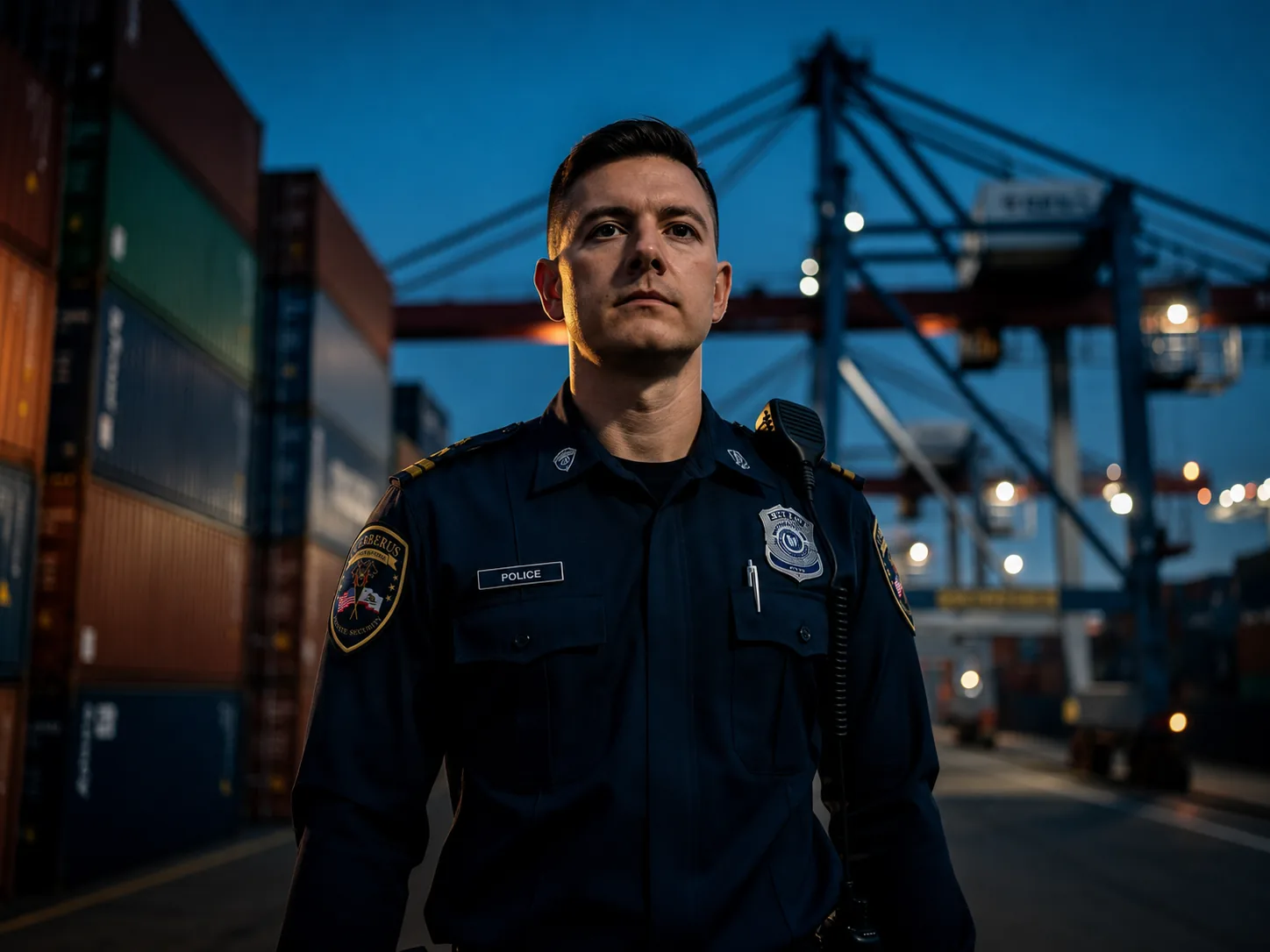
Ports and waterfront terminals move goods around the clock, and controlling who reaches the dock is the first line of defense, so we deliver security for ports and shipping facilities California, staffed by officers trained for marine environments. Our guards verify credentials at the gate, patrol docks and container yards, watch cargo handling, and log every shift in a digital report. Coverage ranges from a single gate post to a full terminal security program.
What maritime and port security covers
Maritime and port security is a guard program for ports, marine terminals, shipyards, and waterfront facilities. Officers control vessel and vehicle access at the gate, verify credentials, patrol docks and container yards, monitor cargo areas, and document every shift to protect goods and people in a high-traffic marine environment.
Why a documented terminal program matters
A written program turns port security into a repeatable process rather than a favor. Post orders define gate procedures, patrol routes, and reporting steps, so every officer follows the same standard and every shift leaves a record you can audit.
Who we protect in this sector
We protect marine terminals, shipping and freight facilities, shipyards, cold-storage and warehouse operations near the water, and waterfront commercial properties. Each site carries a different mix of vessel traffic, cargo, and public access, so coverage is scoped to the risk rather than a single template.
Matching officers to the terminal
Post orders are written with your facility and security leads, so officers learn your gate procedures, your restricted areas, and your escalation contacts before their first shift.
How coverage is structured
Most facilities combine a fixed gatehouse officer with roving dockside and yard patrols, then add overnight and weekend coverage where the perimeter is most exposed. A port security program can run a single shift or cover every hour the terminal operates.
Fixed posts and mobile patrol blended
A staffed gate controls every inbound and outbound movement while a patrol covers the yard, docks, and fence line, so a large facility stays covered without a second standing post at every access point.
Maritime & Port Security Risks We Address
Maritime and port security is built around the losses waterfront facilities feel most: cargo theft, unauthorized dock access, and perimeter intrusion. That is security for ports and shipping facilities California, planned around your gate, berth, and vessel procedures.
Cargo theft and tampering
Containers, staged freight, and high-value cargo are the first targets at a port. Officers watch the yard and cargo areas, check seals and doors, and document anything out of place before a load moves.
Seal integrity and staging checks
Seals, doors, and latches are inspected on each round so tampering is caught early and a discrepancy is recorded with a time and an image.
Unauthorized dock and gate access
A busy terminal can hide someone who does not belong. Officers verify credentials and vehicle paperwork at the gate and challenge anyone without a reason to be on the property.
Restricted-area enforcement
Access to berths, cargo storage, and critical areas is limited to authorized personnel and escorted where your procedures require it.
Perimeter and waterside intrusion
Fence lines, gates, and waterside access points are checked for damage, gaps, and dark corners that invite intrusion. Officers report maintenance issues so problems are fixed before they become incidents.
After-hours exposure
When the terminal is quiet, the property is at its most vulnerable. Overnight officers keep a presence and patrol the perimeter so intruders never get an undisturbed window.
Maritime & Port Security Access Control
Access control sits at the center of the maritime and port security we provide, starting at the gatehouse and the berth. Delivered as security for ports and shipping facilities California, each post is written around your credential checks and vessel schedule.
Gatehouse and vehicle control
Officers staff the gatehouse and control every vehicle and person crossing the property line, logging arrivals and confirming that drivers and loads match your paperwork.
Credential and document verification
Credentials and vehicle documents are checked before anyone is allowed to a berth or yard, which keeps unverified traffic out of the operating area.
Berth and dock access
Access to berths and working docks is limited to authorized personnel, with visitor escort where your procedures require it, so cargo operations are not interrupted by unannounced visitors.
Visitor and contractor logging
A consistent visitor and contractor log gives you a searchable history of who was on the dock, when they arrived, and who authorized the visit.
Perimeter and waterside checks
Officers check fence lines, gates, and waterside access such as ladders and ramps, and report anything that could allow someone onto the property unobserved.
Lighting and gap reporting
Dark corners and fence gaps are documented and reported so maintenance can close the openings that intrusion depends on.
Maritime & Port Security Patrol Coverage
Patrol is where maritime and port security earns its keep beyond the gatehouse, covering docks, container yards, and the perimeter that cameras cannot watch alone.
Dockside and yard patrols
Officers walk or drive the docks and container yard on a set schedule, checking that equipment and cargo are where they should be and that nothing has been moved or opened.
Randomized patrol timing
Randomized rounds keep arrivals unpredictable, which matters far more than a fixed hourly walk an intruder can time.
Perimeter and fence-line patrols
Fence lines, gates, and lighting are checked for damage, gaps, and dark corners that invite intrusion, and every issue is reported for follow-up.
Waterfront access checks
Ladders, ramps, and small-craft access points are inspected on each round so the waterside stays as controlled as the landside.
Overnight, weekend, and multi-site coverage
Most port risk concentrates when the terminal is quiet, so overnight and weekend shifts are scheduled around your operations, and a route patrol can cover nearby sites.
Shared coverage across facilities
A route patrol gives smaller waterfront sites a visible presence without a full-time post at every address.
Maritime & Port Security Officers and Reporting
The officers who deliver maritime and port security are briefed on your facility before they take a post and supported by supervisors throughout the assignment.
Officer duties and conduct
A port post is a job, not a warm body. Officers arrive in uniform, on time, and ready to work the position you scoped, following written orders and representing your operation professionally to drivers and terminal staff.
Site-specific post orders
Post orders spell out gate procedures, patrol routes, restricted areas, and reporting steps so a relief officer can take over without a drop in standards.
Incident documentation
Every gate movement, patrol, discrepancy, and suspicious observation is recorded in a digital report. Entries are written plainly so management, insurers, and police can rely on them.
Timestamps and evidence
Where a picture helps, officers capture one, so a damaged seal or an open gate is documented with a time and an image rather than a recollection.
Supervision and shift handoff
Field supervisors make scheduled site visits to confirm the post follows its orders, and the outgoing officer briefs the incoming one so nothing is lost between shifts.
Escalation to police and management
Clear escalation steps tell officers when to notify your on-call contact and when to involve police, so a serious incident never waits on a guess.
Maritime & Port Security Coverage Options and Pricing
Maritime and port security is priced around the size of the facility, the number of gates and berths to control, and the hours that need coverage.
Choosing a coverage schedule
Coverage can start with a single gate shift, an overnight patrol, or full terminal hours. We match the schedule to your vessel and operations calendar.
Starting small and scaling up
Many facilities begin with one shift and add hours or a second post after the first month, so the program grows with proven need.
What affects maritime security pricing
Pricing depends on facility size, the number of gates and berths, whether the post is full or part time, and how much of the job is dockside versus perimeter. We deliver security for ports and shipping facilities California, for a single gatehouse post or a full terminal program.
How we prepare a quote
We review your layout, gate count, and vessel schedule before quoting, so the price reflects your actual risk instead of a flat rate.
Getting started
A short conversation about your facility and its concerns is enough to begin. We walk the site, recommend coverage, and put the plan in writing.
Request a free site assessment
Reach out through the contact form or by phone and we will schedule a no-cost assessment of your port or waterfront facility.
Get Protected Today
Ready to secure your site with maritime & port security?
Every security plan starts with a conversation. Tell us about your property and we will design coverage that fits your operation and your budget.
© 2026 1 Cerberus Security & Patrol. California Bureau of Security and Investigative Services (BSIS) — PPO 121682.