Insights & Updates
What Are Unarmed Security Guards?
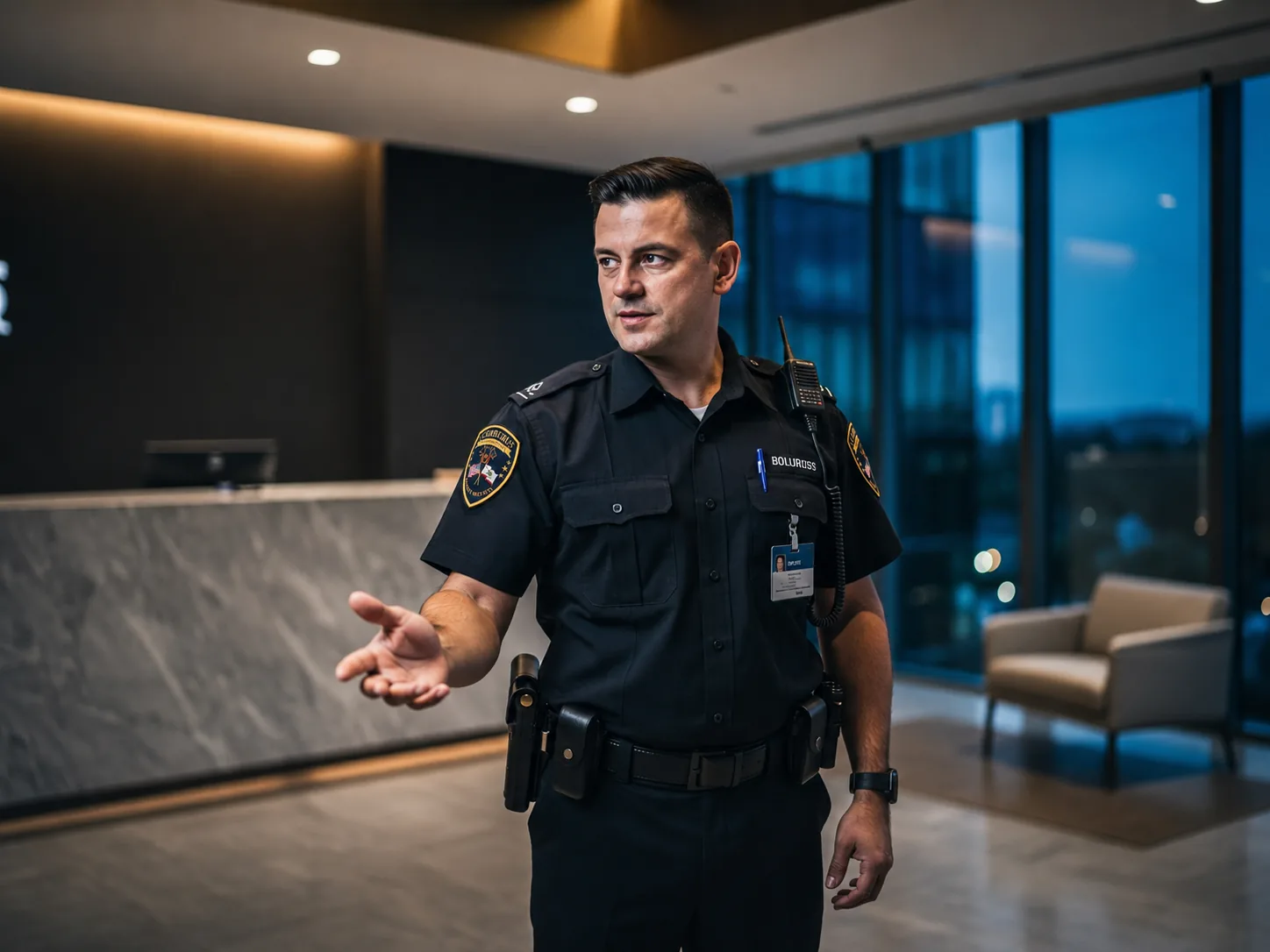
Unarmed security guards are licensed, uniformed officers who protect people and property through presence, access control, observation, and de-escalation rather than a firearm.
An unarmed security guard is a licensed officer hired to protect people, property, and order without carrying a firearm. Instead of relying on a weapon, unarmed officers work through visible presence, controlled access, careful observation, clear communication, and de-escalation. In California they are regulated professionals rather than informal watchmen, and both their authority and their limits are set by state law. For a property owner weighing security options, understanding that definition is the starting point, because it explains what an unarmed post can reasonably be expected to accomplish and where its limits lie.
A Licensed Role Defined by State Law
California regulates security guards through the Bureau of Security and Investigative Services, part of the Department of Consumer Affairs. An unarmed officer must hold a valid guard registration, commonly called a guard card, which involves completing state-mandated training and passing a background check. The company that employs them must hold a Private Patrol Operator license, such as PPO 121682. That framework is what separates a licensed security officer from an untrained staff member in a uniform, and it also defines the boundaries of the role. It is the reason clients should confirm licensing, insurance, and training records before hiring any provider, rather than assuming that a uniform implies a credential.
Deterrence Through Presence
The core of unarmed security is prevention. A uniformed officer at an entrance, walking a sales floor, or touring a parking area changes how a property is perceived by someone considering theft, vandalism, or trespass. Much property crime is opportunistic, and a visible, alert officer removes the impression that a site is an easy target. That deterrent effect depends on posture and attention as much as on the uniform itself. An officer who is engaged, makes eye contact, varies their route, and moves through the property is far more effective than one who stays seated and distracted, and a presence that appears only occasionally is easy to plan around.
What an Unarmed Officer Actually Does
- Access control: checking credentials, logging visitors, and managing entry points during business and after-hours periods
- Patrols: walking or driving assigned routes to check doors, gates, lots, and equipment
- Observation and reporting: recording what was seen, when it was seen, and what was done about it
- De-escalation: calming disputes and managing behavior before a situation grows
- Customer service: greeting visitors, giving directions, and acting as a calm point of contact
What Unarmed Security Is Not
Unarmed officers are not police officers. They do not have police powers, they cannot search people the way law enforcement can, and they rely on observation, communication, and the narrow citizen's arrest authority available to any member of the public. They also do not carry a firearm. That boundary matters in both directions. A property that genuinely needs an armed response capability is not a good fit for an unarmed post, and a property that mainly needs order, access control, and a professional presence does not necessarily benefit from an armed one. A provider that explains those limits plainly is usually a provider worth working with.
Where Unarmed Officers Fit Best
Unarmed security is the standard choice where the primary goals are order, access control, and a professional presence. That includes corporate offices and lobbies, retail stores, hotels and hospitality venues, healthcare waiting areas, campuses, residential communities, warehouses, and events. These settings benefit from an officer who can be firm when a situation requires it and welcoming the rest of the time. The same role also adapts to after-hours coverage, where the emphasis shifts toward perimeter checks, access control, and documentation. That flexibility is why unarmed security is the most common form of contracted protection.
Choosing between an unarmed post, an armed post, or a patrol-only arrangement comes down to the specific risks of the property. A licensed provider can walk the site, review how it is used across the day and night, and recommend coverage that matches the actual risk rather than a generic template. The most useful plans combine an officer presence with practical measures such as lighting, access control, and clear written procedures.
Not sure whether your property needs an unarmed post? Request a walkthrough and we will outline the options.
Request a Security Assessment →Related services and areas
Frequently asked questions
Are unarmed security guards allowed to detain someone?
Unarmed officers can generally detain a person only under the limited citizen's arrest authority available to any member of the public, and only when a crime has been committed in their presence or they have specific legal grounds. In practice, most unarmed posts emphasize observation, reporting, and de-escalation, and officers coordinate with local law enforcement rather than attempting detentions.
Do unarmed security guards carry any equipment?
Typical equipment includes a uniform, an identification badge, a radio or phone for communication, a flashlight, and a notebook or reporting app. Unarmed officers do not carry a firearm. Any additional equipment is determined by the post and the client's instructions.
What training is required to be an unarmed security guard in California?
California requires a guard registration issued by the Bureau of Security and Investigative Services, which involves completing the state-mandated pre-assignment training and passing a background check. Officers must also complete continuing training to keep the registration current.
Can an unarmed security guard work overnight shifts?
Yes. Unarmed officers commonly work overnight, weekend, and holiday shifts. Overnight coverage often focuses on access control, patrols of grounds and parking areas, and documenting activity for the next business day.
Is unarmed security the same as a concierge or front-desk staff member?
No. A concierge or front-desk employee handles hospitality and building services. An unarmed security officer is a licensed professional whose primary responsibility is the safety and security of the property, with observation, access control, and incident reporting as core duties.