Insights & Updates
What Does a Security Guard Do?

Observation, deterrence, access control, patrols, reporting, and escalation are the core of the job. Here is what a professional security officer actually does on a shift.
Security officers are a familiar sight in lobbies, parking lots, storefronts, and event venues, but the job is often misunderstood. People sometimes picture a guard simply standing at a door, or assume officers are a substitute for police. Professional unarmed security work is a defined role with specific duties, limits, and reporting responsibilities. Understanding what officers actually do helps property owners and managers set realistic expectations and get the most value from a security program.
Observe, Deter, and Report
The foundation of the role is observation. Officers watch for unusual activity, unsafe conditions, and emerging problems, and they document what they see. A visible uniformed presence also acts as a deterrent: people intent on theft, vandalism, or trespass tend to avoid a property where they can be seen and identified. The third pillar is reporting, because an observation that is never recorded cannot support management decisions, insurance claims, or a police report. Good officers treat all three as one continuous job rather than separate tasks.
Access Control and Front-Desk Duties
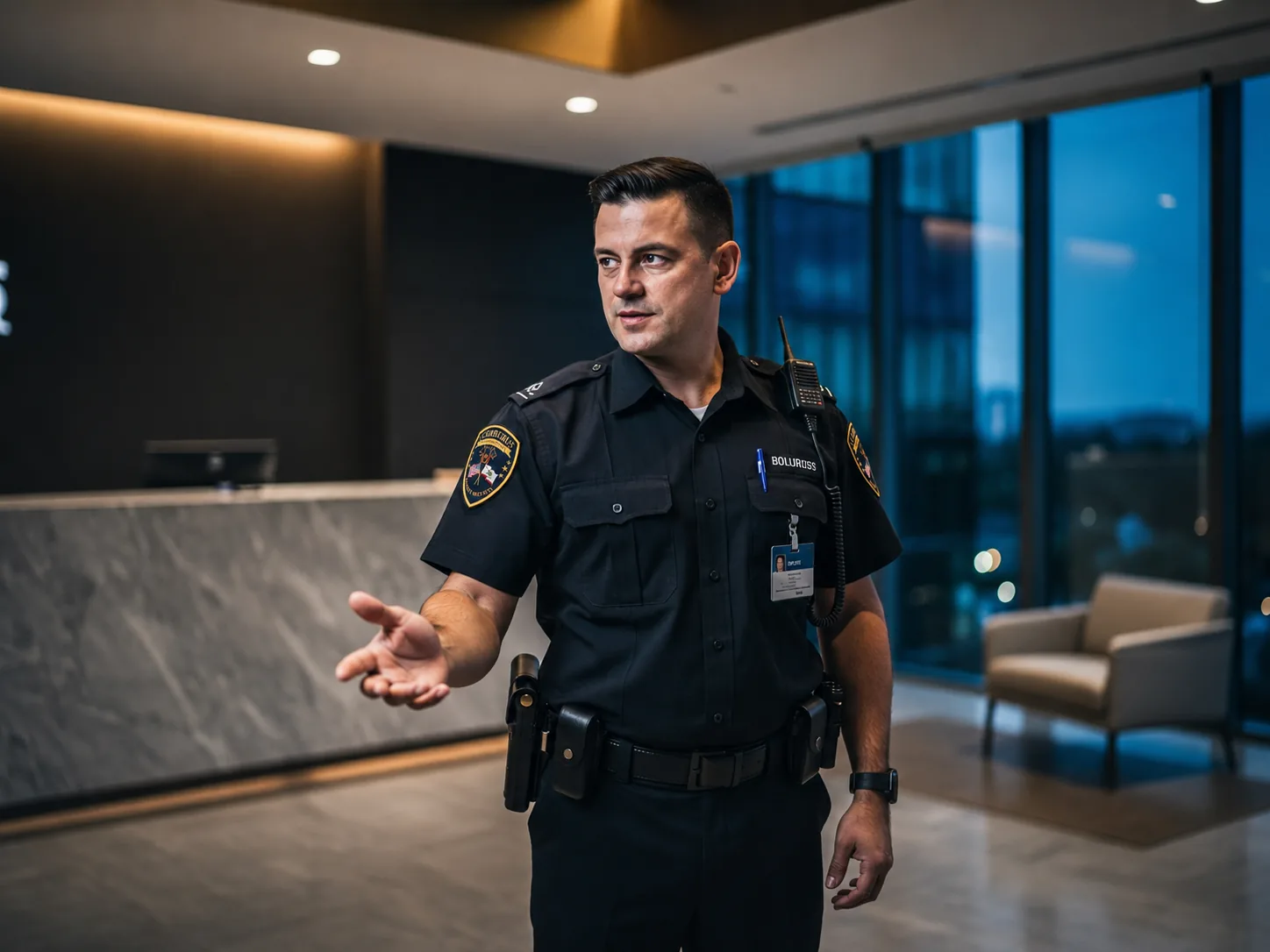
Many posts center on controlling who enters and leaves a property. Officers may verify credentials, sign in visitors, check badges, monitor entrances and loading docks, and enforce rules about after-hours access. At corporate and residential properties, the same officers often serve as the first point of contact, answering questions and directing visitors. This blend of security and customer service is one reason unarmed officers fit so many environments: they can be firm about access rules without making a workplace feel hostile.
Patrols and Property Checks
Patrols are the physical layer of the job. Depending on the site, officers may walk interior routes, check stairwells and restrooms, inspect parking areas, verify that doors and gates are secured, and look for hazards such as leaks, blocked exits, or damaged lighting. Patrols are usually logged so the property has a record of what was checked and when. On larger sites, a vehicle may cover perimeter roads and distant lots that a walking officer could not reach efficiently.
- Monitor entrances, exits, and high-traffic areas
- Verify credentials and manage visitor and contractor access
- Conduct scheduled and random foot patrols
- Check that doors, gates, windows, and equipment are secure
- Document incidents, observations, and unusual conditions
- Respond to alarms, disturbances, and medical situations
- Coordinate with emergency services and property management
Documentation and Reporting
Reporting turns individual shifts into a usable record. Officers typically complete daily activity reports describing patrols, contacts, and conditions, and incident reports when something significant happens. A well-written report is factual, timed, and free of speculation. It records what was observed, what action was taken, and who was notified. For property managers, these reports reveal patterns such as repeated trespassing, equipment failures, or problem areas that need attention.
De-escalation and When to Call Police
Unarmed officers are trained to calm situations rather than escalate them. When a confrontation develops, the priority is to create distance, communicate clearly, and avoid unnecessary physical risk. Officers may detain someone within the limits of the law when a crime has occurred, but serious or violent situations are handled by calling law enforcement and preserving the scene. An officer who understands the limits of the role, and who escalates appropriately, protects both the property and the people on it.
Explore unarmed security coverage for your property.
View Security Services →In short, a security officer is an observer, a deterrent, an access-control point, and a record-keeper. The role is not to replace police or to take unnecessary risks, but to maintain order, notice problems early, and create a documented account of what happens on your property. Knowing those boundaries helps you specify the right post orders and evaluate whether the officers assigned to your site are performing the job well.
Related services and areas
Frequently asked questions
What is the main job of a security guard?
The core role is to observe, deter, and report. Officers watch for unusual or unsafe activity, maintain a visible presence that discourages crime, control access, and document what happens during their shift.
Do security guards carry weapons?
Unarmed officers do not carry firearms. Armed officers hold additional licenses and permits and are assigned to environments where the risk profile calls for an armed capability. The choice depends on the property and its requirements.
Can a security guard make an arrest?
A security officer is not a police officer. Officers may detain someone within the limits of the law when a crime has occurred, but serious or violent situations are handled by calling law enforcement and preserving the scene.
What does a security guard do on an overnight shift?
Overnight officers typically handle access control, conduct interior and exterior patrols, check that doors and gates are secured, watch for hazards, and document activity. Overnight posts are common at construction sites, industrial properties, and buildings that are empty after hours.
Do security guards write reports?
Yes. Officers commonly complete daily activity reports and incident reports. These records describe patrols, contacts, and unusual events, and they help property managers identify patterns and support insurance or police follow-up.
How is a security guard different from a police officer?
Police officers are sworn law enforcement with arrest powers and a public mandate. Security officers are privately employed, work within the limits of the law, and focus on a specific property's safety, access control, and reporting.