Insights & Updates
What Is Corporate Security?
Corporate security protects people, property, and daily operations across offices and business campuses. Here is what the role covers and how a program is built.
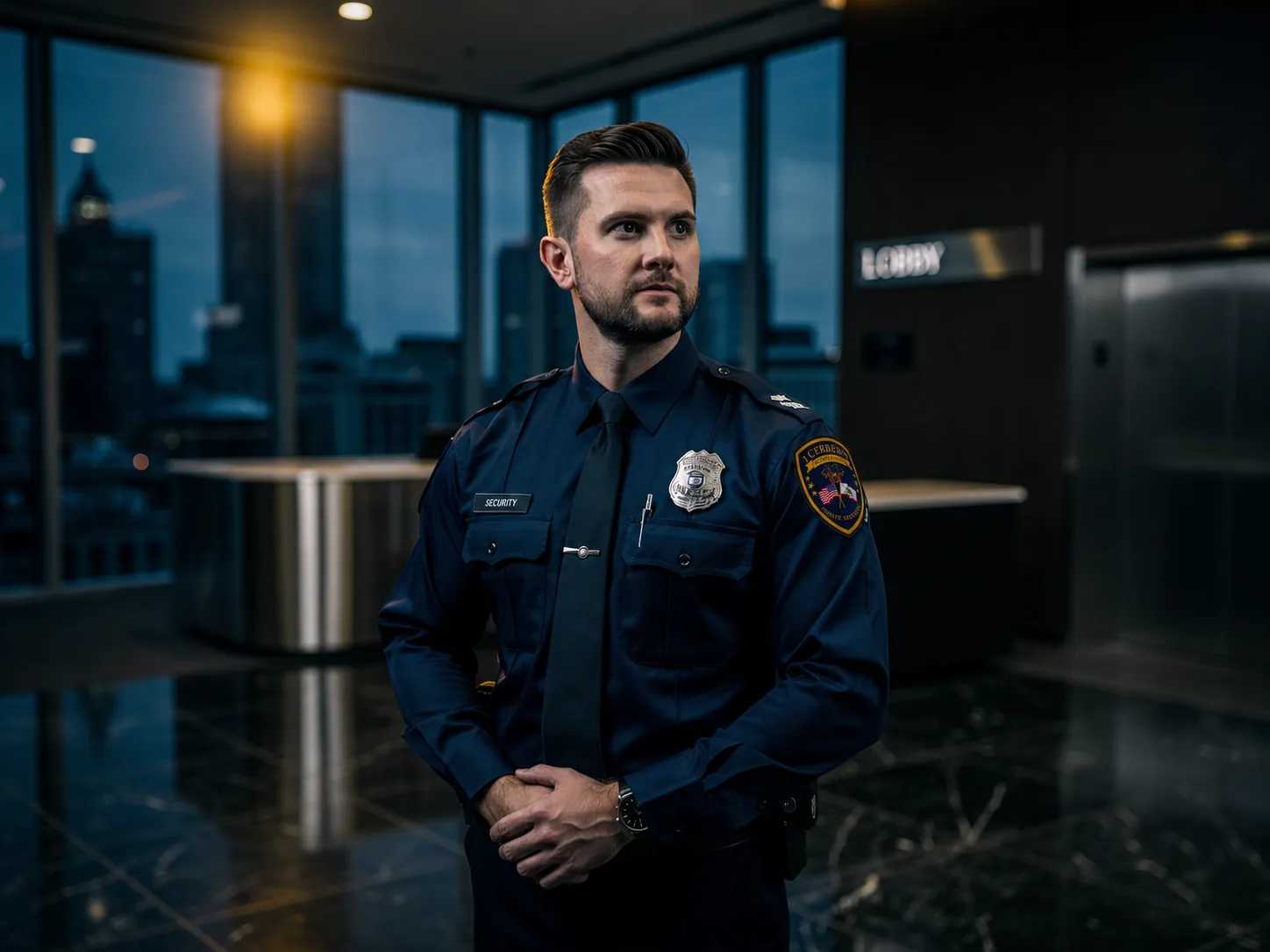
Corporate security is the practice of protecting an organization's people, property, and daily operations across its offices, campuses, and business facilities. It is broader than a single guard assigned to a door. A functioning corporate security program usually combines a visible front-desk presence, access control, interior and perimeter patrols, incident reporting, and clear coordination with the teams that run the building. For many companies, security officers are the first people employees and visitors meet each morning and the first trained response when something on site goes wrong. That mix of hospitality and readiness is what separates a professional post from a chair that simply observes.
What Corporate Security Covers
The exact scope depends on the building, the tenant mix, and the hours of operation. A single-tenant headquarters has different needs than a multi-tenant tower with a shared lobby, a parking structure, and a busy loading dock. In practice, corporate security usually reaches the reception area, visitor and vendor sign-in, badge and access control, mail and delivery areas, elevators and stairwells, and after-hours rounds of the floors and exterior. Office parks and business campuses may add gatehouse coverage, parking enforcement, and patrols between buildings. The right scope is the one that matches how your property is actually used, not a template borrowed from another site.
- Lobby and front-desk coverage during business hours
- Visitor, contractor, and vendor sign-in and escort
- Badge access control at entrances and restricted areas
- Interior, stairwell, and perimeter patrols
- After-hours rounds and lock-up checks
- Incident documentation and daily activity reports
How a Corporate Security Program Is Built
A program that holds up over time starts with a walkthrough and an honest conversation about how the building really runs. Which doors are meant to stay locked? Who needs after-hours access? How are deliveries received, and where do employees park when they leave late? Those answers shape the post orders, the written instructions an officer follows on every shift. Post orders lay out duties, key contacts, escalation steps, and reporting expectations for your specific site, so coverage stays consistent no matter which officer is assigned. Reviewing those orders when your lease changes, a tenant moves in, or construction begins keeps the program aligned with the property instead of drifting away from it.
Front Desk and Access Control
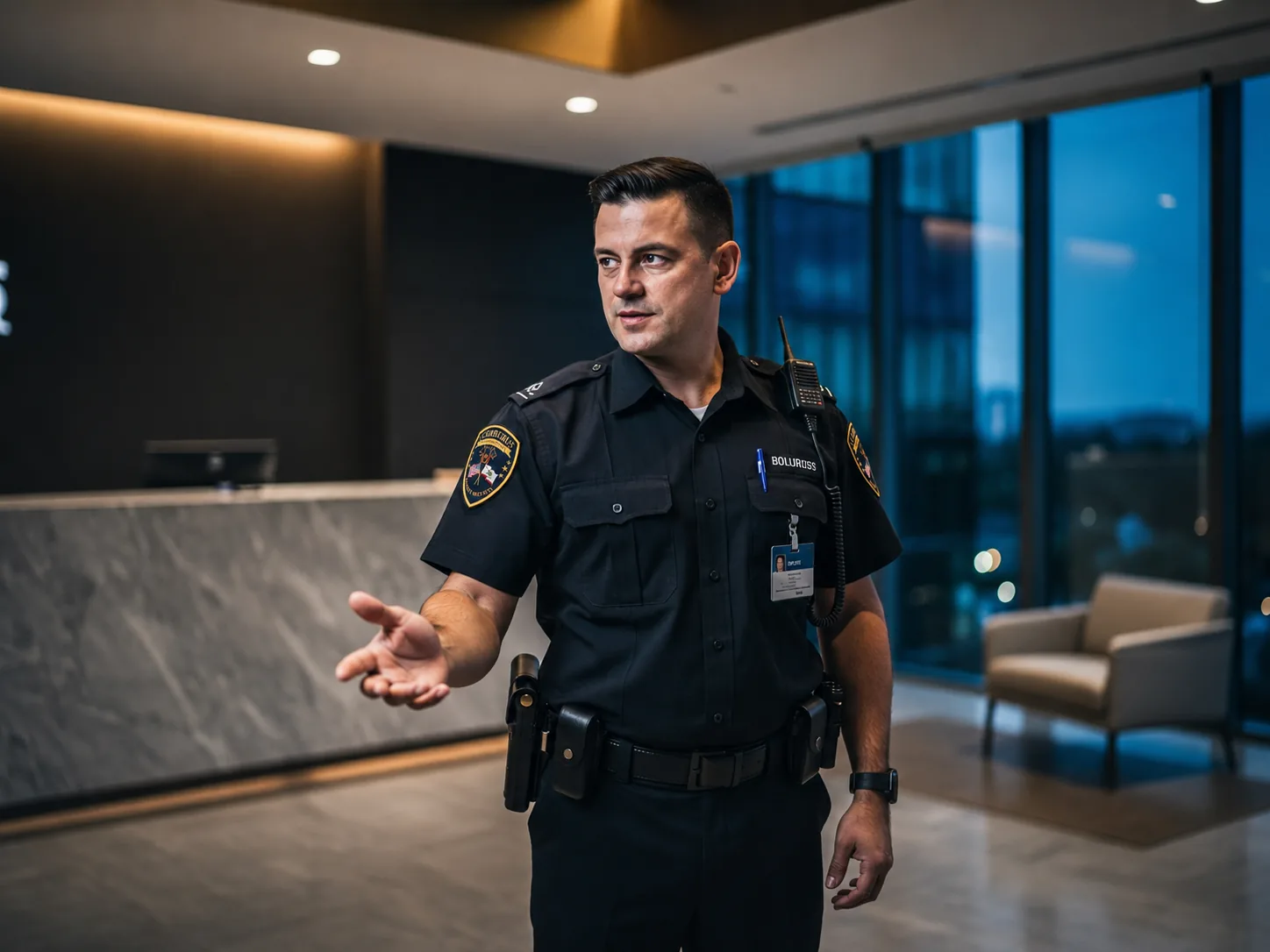
The front desk is usually the busiest point in a corporate building and the place where security has the most visible effect. A professional officer greets visitors, confirms appointments, issues badges, and keeps a record of who is on site. That same post watches for tailgating through secure doors, notices unattended packages, and answers questions from employees and guests. Done well, the role blends hospitality with a security purpose rather than acting as a barrier. Visitors should feel welcomed and accounted for at the same time, which is a skill that comes from clear procedures and a calm, professional manner.
Beyond the Lobby
Security officers also support the parts of the workday that are easy to overlook. They can walk employees to their cars after a late shift, monitor a loading dock during a delivery window, check a stairwell or storage area that cameras do not fully cover, and respond to a fire or medical alarm until first responders arrive. Officers document incidents while details are still fresh, which keeps the account accurate and useful for management later. On a multi-building campus, patrols between facilities give the property a consistent presence across a wider footprint and a single point of contact for issues that cross property lines.
Choosing Coverage That Fits
There is no single staffing model that suits every office. Some properties need a dedicated officer at the desk throughout the day, others need a roving officer who checks floors and entrances on a schedule, and larger sites often combine both. Coverage can be scaled by shift, day of week, and season, and adjusted as a tenant moves in, a construction project starts, or the building's hours change. The goal is a plan that matches the actual rhythm of the property. A provider should be able to explain what the officers will do, how they will report, and how the post will be supervised before the first shift begins.
Request a corporate security consultation
Schedule a Consultation →Related services and areas
Frequently asked questions
What does corporate security include?
It generally includes front-desk and lobby coverage, visitor sign-in, badge and access control, interior and perimeter patrols, after-hours rounds, and incident documentation. The exact duties are set out in post orders written for your building.
Does my office need a full-time security officer?
That depends on foot traffic, the number of entrances, the sensitivity of the floors, and your operating hours. Some buildings need a dedicated desk post, while others are served by scheduled patrols or a combination of both.
Can security officers work alongside our existing reception staff?
Yes. Officers can take on visitor screening, badge issue, and lobby observation while your staff handle their usual duties, or the two roles can be blended into one post. The split is documented in the post orders.
How is corporate security coverage scheduled?
Coverage is planned around your operating hours, arrival and departure peaks, and any after-hours needs. It can be set by shift and adjusted when your building schedule or tenant mix changes.
Are the officers licensed?
1 Cerberus Security & Patrol operates as a licensed Private Patrol Operator in California under PPO 121682. Officers work under that license and follow the site-specific post orders for your property.
How do we get started?
Call 1 (800) 460-8571 or use the contact page. A walkthrough and a conversation about your building are usually the first steps before a coverage plan is proposed.