Insights & Updates
What Is Mobile Patrol Security?
Mobile patrol security sends a uniformed officer along a route to check multiple properties in one shift. Here is how it works, what officers look for, and where it fits.
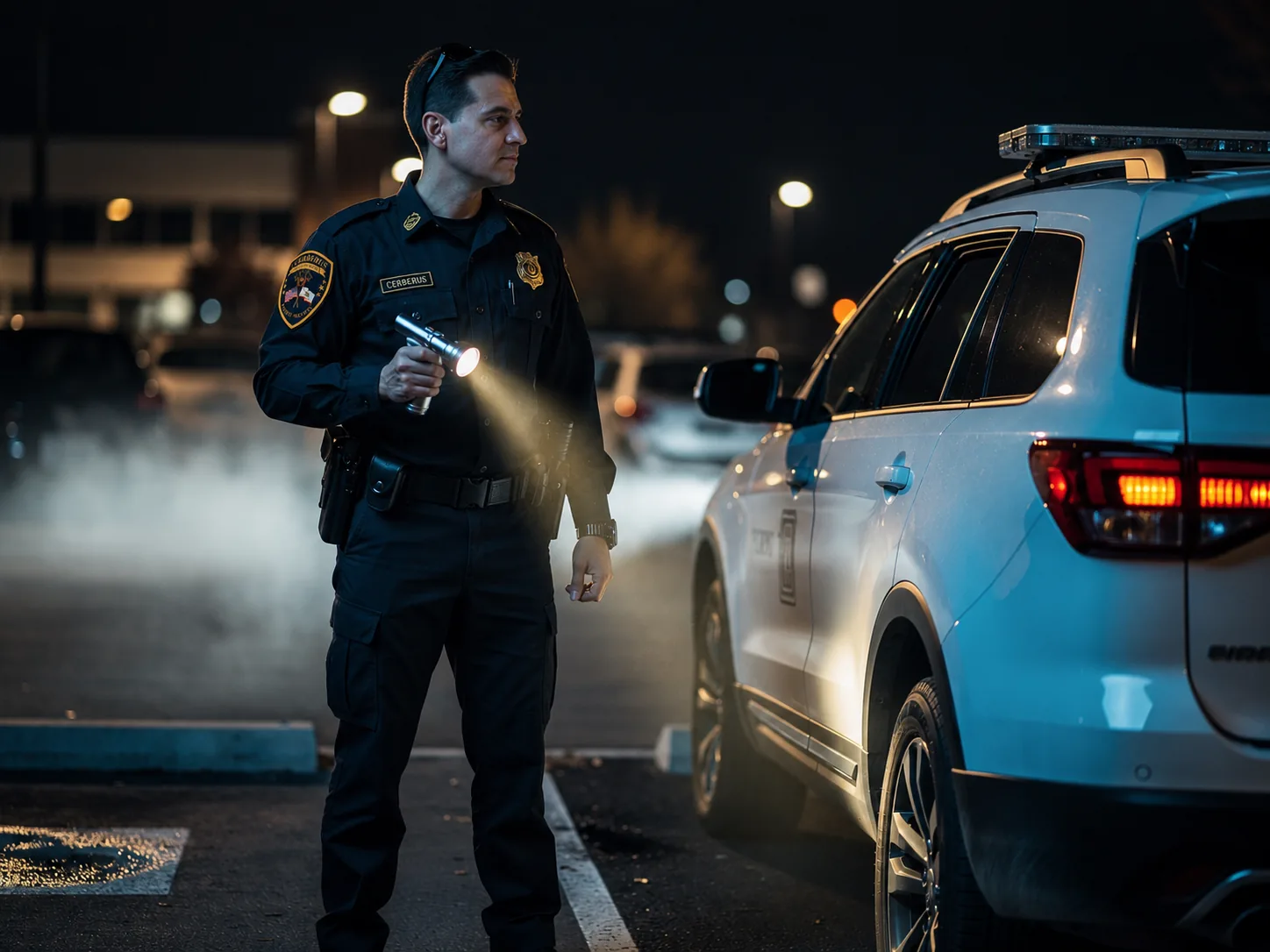
Mobile patrol security is a service in which a licensed, uniformed officer drives a marked or unmarked vehicle along a scheduled route and checks on several properties during a single shift. Rather than standing post at one address, the officer moves between sites, walks the exterior, tests doors and gates, looks for signs of forced entry or after-hours activity, and records what was found. For properties that need a visible security presence but cannot justify a full-time guard, mobile patrol is often the most practical way to get one. It is also a practical option for an owner who wants an independent set of eyes on a property during hours when staff or tenants are not present, and for a manager who needs a record of conditions rather than a verbal account.
How a Patrol Route Works
Every patrol program starts with the property itself. Before the first visit, the security provider maps the site's access points, parking areas, lighting, alarm zones, and the areas the client wants checked. Those details become a route with defined checkpoints and visit windows. Officers typically confirm each checkpoint with a tag, a QR code, or a GPS reading so the client can see that the visit happened and when. Routes can be adjusted seasonally, after an incident, or whenever a tenant's operating hours change, which keeps the schedule relevant rather than fixed.
What Officers Check During a Visit
- Perimeter and entry points: doors, gates, loading docks, and fences are pushed, pulled, and confirmed secure.
- Parking areas: vehicles, dumpsters, stairwells, and walkways are checked for loitering, vandalism, and overnight activity.
- Lighting and landscaping: burned-out fixtures, blocked sightlines, and overgrown areas are noted for the property manager.
- Interior checks: where the client authorizes access, officers walk common areas, corridors, restrooms, and vacant suites.
- Documentation: each visit is logged with timestamps, checkpoint readings, photos, and a short written narrative.
- Escalation: anything suspicious or damaged is reported to the client and, when appropriate, to local police.
The exact checklist is tailored to the site. A fenced industrial yard, a neighborhood retail center, and a multi-tenant office campus each have different priorities, and the value of a patrol comes from knowing what actually matters at that specific address. A generic route that ignores the property's layout produces activity without much insight. Officers should also know who to call if something is wrong, what the client considers an emergency versus a routine note, and whether the police should be contacted directly. Those details are part of what separates a useful patrol program from a vehicle that simply drives past.
Marked Vehicles and Unmarked Vehicles
Marked patrol vehicles advertise that the property is being watched, and the sight of a security vehicle pulling through a lot is often enough to move an opportunist along. Unmarked vehicles are used where a lower profile is preferred, such as residential communities, medical offices, or sites where management does not want to broadcast that coverage is in place. Some clients use a mix, with marked units during the evening and unmarked units later at night, depending on what they want the presence to communicate. The choice is usually a balance between deterrence and discretion, and it can change by property, by season, or by the specific concern the client is trying to address. A provider should be willing to explain how each option would look on your site rather than treating the vehicle as a one-size-fits-all decision.
What Mobile Patrol Is Not
Mobile patrol is not the same thing as a stationary guard post. If a property needs continuous access control, a lobby presence, or someone physically on site for the entire shift, that calls for an officer assigned to that location. Mobile patrol also does not replace working alarms, cameras, or exterior lighting; it works alongside them. The officer is present periodically rather than constantly, and a program is most effective when the client understands that distinction from the beginning.
If you manage a property with predictable quiet hours, several buildings, or a parking lot that sits empty overnight, a mobile patrol route can add a visible and documented presence without the cost of a dedicated post. The right place to start is a walkthrough of the site and a direct conversation about what you want checked and how often it should be checked.
Request a mobile patrol assessment for your property.
Request a Security Assessment →Related services and areas
Frequently asked questions
What is mobile patrol security?
It is a service in which a uniformed officer drives a route and checks on multiple properties during a shift, confirming that doors and gates are secure and documenting each visit.
Is mobile patrol the same as a guard on site?
No. A stationary guard stays at one property for the duration of a shift, while mobile patrol visits several properties at intervals during the same shift.
Can a mobile patrol officer check inside a building?
Yes, when the client authorizes interior access. Officers can walk common areas, corridors, restrooms, and vacant suites as part of the route.
How do clients know a patrol visit happened?
Visits are typically verified with checkpoint tags, QR codes, or GPS readings and recorded in a report that includes timestamps and observations.
Are patrol vehicles marked or unmarked?
Both options are available. Marked vehicles provide visible deterrence, while unmarked vehicles are used where a lower profile is preferred.
Does mobile patrol replace cameras or alarms?
No. It complements them by adding a physical presence that can verify a condition, secure an opening, and document what happened.