Insights & Updates
How Security Guards Help Deter Shoplifting
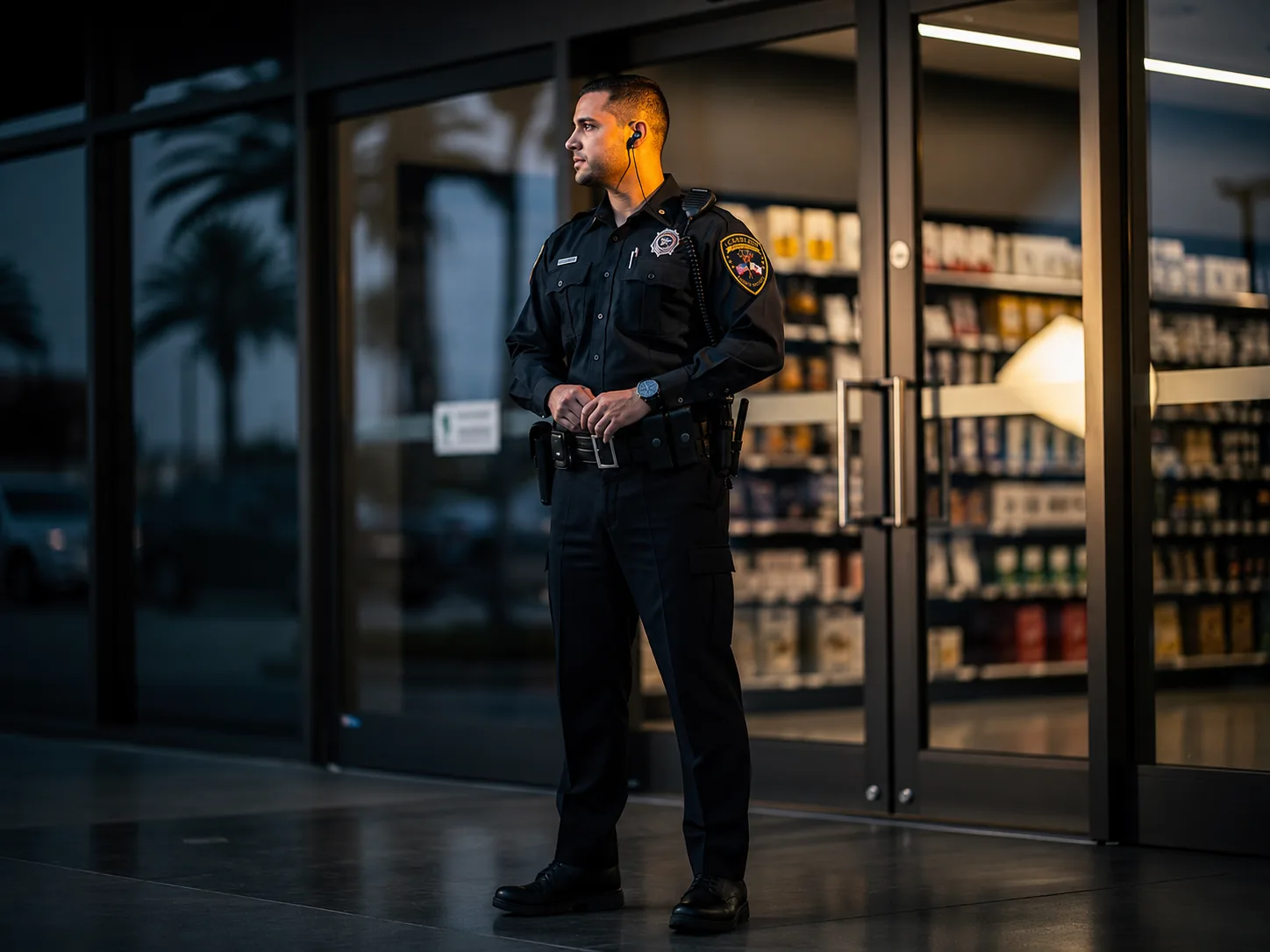
Security guards support shoplifting deterrence through a visible presence, close observation, and consistent reporting. Here is how each part of that role works.
Shoplifting is a daily concern for many retail stores, and no single measure removes it. What security guards contribute is deterrence, observation, and documentation. Those three things work together to make a store a less attractive target and to give management a factual record when an incident does occur. This article explains each part of that role and how a store can get the most from it without expecting an officer to do something the law or store policy does not allow.
Deterrence Starts With Visibility
The most basic thing a uniformed officer does is be seen. A person standing near an entrance or walking a sales floor signals that the store is watched, which changes the calculation for someone considering theft. Deterrence is not about confrontation. It is about removing the privacy and confidence that shoplifting depends on. Officers vary their position and their route so the presence does not become predictable, and they pay attention to the transitions, including store opening, shift changes, and the last hour before closing, when staff attention is stretched thin.
Observation: Recognizing Behavior Worth Watching
Trained officers watch for patterns rather than profiling individuals. That can mean noticing a person who repeatedly enters and leaves without buying, someone who carries merchandise toward a blind spot, or a group that splits up and reunites near an exit. Officers also watch the areas that cameras cover least well, such as fitting rooms, restrooms, and the aisles behind tall displays. The goal is to notice early enough that store staff can respond according to policy, not to make an accusation on the spot. Officers are also trained to keep their attention on behavior rather than appearance, and to avoid the kind of assumptions that can lead to a confrontation with a customer who has done nothing wrong. When something looks worth acting on, the officer relays it to the staff member responsible for the store's response.
What Officers Are Trained to Look For
- Concealment behavior: Merchandise moved into a bag, clothing, or stroller rather than a cart.
- Repeated visits: The same person returning several times without a clear reason.
- Blind-spot movement: Items carried away from main aisles, toward fitting rooms, restrooms, or back corridors.
- Team patterns: Two or more people working together, with one drawing staff attention while another moves merchandise.
- Exit timing: A person heading for the door during a moment when staff are distracted or busy with other customers.
Reporting Turns Observation Into a Usable Record
Observation is only useful if it is written down. Security officers document what they saw, the time, the location within the store, and the response. Those reports let management see patterns across days and weeks, support a decision to trespass someone from the property, and give loss-prevention staff the detail they need to follow up. A well-written report separates what the officer observed from what the officer concluded, which keeps the record accurate and usable if it is reviewed later. The best reports are written while the details are fresh, and they include enough context that someone who was not on the floor can understand what happened. Over time, those records help a store see whether a problem is isolated or recurring, and whether the coverage schedule still matches where incidents are actually happening.
Coordinating With Store Staff and Loss Prevention
Deterrence works best when officers and store employees share the same expectations. Before a shift, the officer should know the store's policy on approaching a suspected shoplifter, who authorizes a detention, how to handle a refusal to leave, and when to involve local law enforcement. Officers can also support staff who are uncomfortable confronting a customer, and they can help close the small gaps that shoplifters look for, such as unlocked stockroom doors or unattended fitting rooms. That coordination is ongoing rather than a one-time briefing, because store policies, staff, and layouts change. A short check-in at the start of each shift keeps officers and management aligned on what matters that day.
Want a deterrence-focused coverage plan for your store? Talk to our team.
Contact Our Team →Related services and areas
Frequently asked questions
Can a security guard stop shoplifting?
A guard's main contribution is deterrence and observation. Whether an officer intervenes depends on state law and the store's policy, and detentions are handled within those limits. Officers document incidents so management and loss-prevention staff can follow up.
Is a uniformed guard better than a plainclothes officer for deterrence?
Uniformed officers are the more visible deterrent and are typically used to discourage theft before it starts. Plainclothes or loss-prevention staff are sometimes used to observe without being noticed. Many stores use both for different parts of the day.
Do security guards watch cameras?
Some posts include camera monitoring, but camera work is often combined with floor presence. An officer who only watches monitors cannot cover blind spots or interact with customers the way a floor officer can.
How many guards does a store need?
That depends on the store's size, layout, hours, and number of entrances. A single officer may be enough for a small store, while a larger location may need several posts or a roving officer. A walkthrough helps determine the right number.
What should a security officer's report include?
A useful report covers the date and time, the location in the store, what the officer observed, what action was taken, and who was notified. It should keep observations separate from conclusions so the record stays factual.