Insights & Updates
What Is Retail Security?
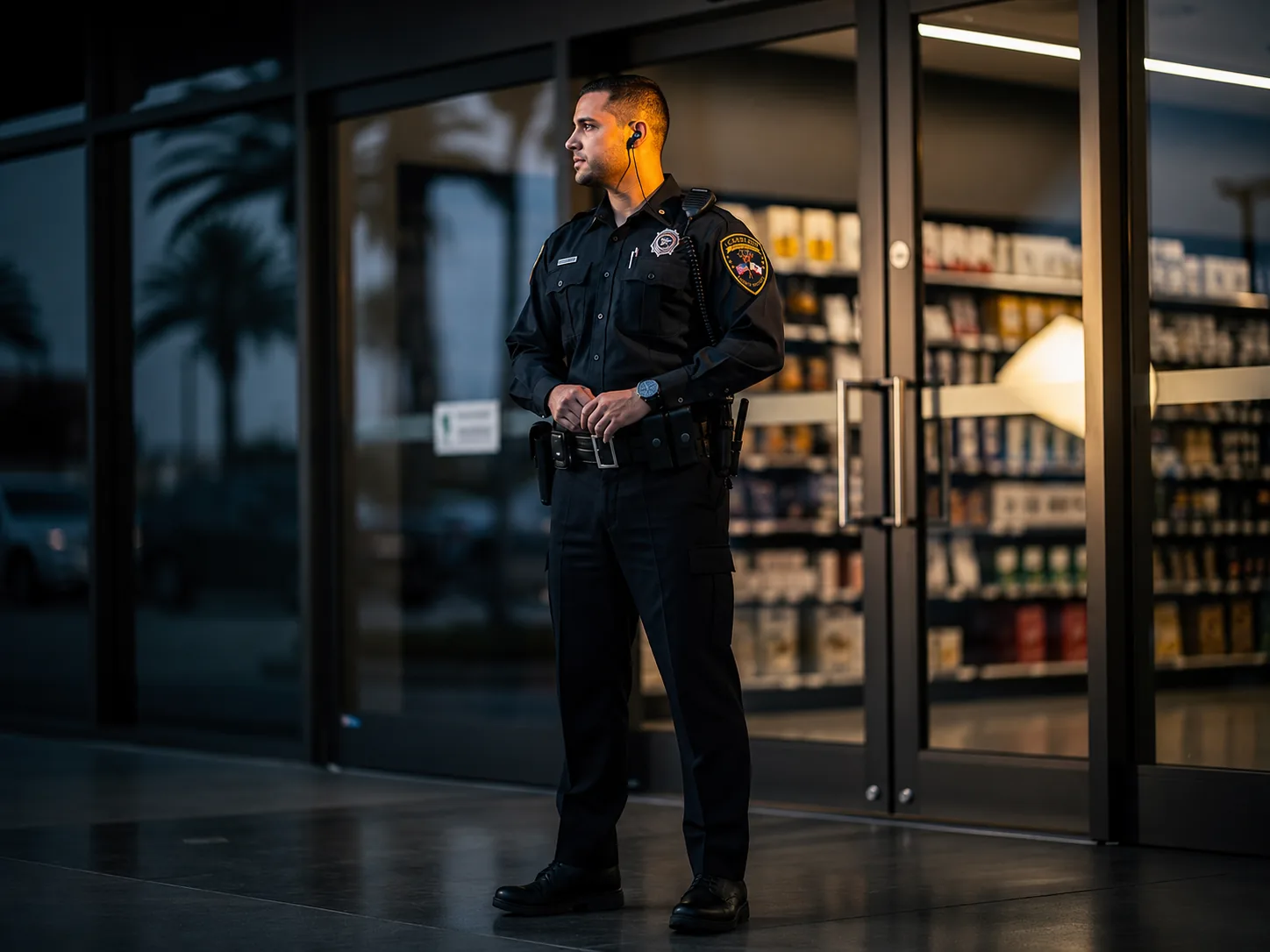
Retail security covers the officers, procedures, and physical measures that protect a store's customers, staff, merchandise, and property. Here is how the pieces fit together.
Retail security is the combination of on-site personnel, store procedures, and physical measures that a retailer uses to protect customers, employees, merchandise, and property. It is a broad discipline. It includes the uniformed officer near the entrance, the loss-prevention associate watching a bank of cameras, the written policy that tells staff how to respond to a suspected shoplifter, and the incident report that records what happened afterward. This article explains what retail security is, what retail security officers actually do, and how a store decides what kind of coverage fits its operation.
Retail Security Is More Than a Guard at the Door
A common misconception is that retail security begins and ends with a uniformed presence at the front entrance. That presence matters, but it is one part of a larger program. A working retail security program connects the sales floor, the stockroom, the receiving dock, the fitting rooms, the parking area, and the point of sale. Each of those areas carries a different exposure. Merchandise can walk out through a fitting room, high-value goods can disappear from a stockroom, and a delivery bay can sit open during a shift change. Retail security looks at all of those areas together instead of treating the front door as the only point of risk.
What Retail Security Officers Actually Do
- Visible presence: A uniformed officer on the floor signals that the property is watched and changes how the store is perceived.
- Observation: Officers watch entrances, high-traffic aisles, fitting rooms, and self-checkout areas for behavior worth noting.
- Access control: Depending on the property, officers may screen deliveries, check employee badges, or monitor a staff entrance.
- Customer and staff contact: Officers answer questions, direct shoppers, and support employees who are handling a difficult interaction.
- Incident documentation: Officers record what they saw, when they saw it, and what was done in response.
- Coordination with management: Officers work to the store's own policies on detention, trespass, and escalation rather than deciding those questions alone.
Loss Prevention, Security, and How They Differ
The terms loss prevention and retail security are often used interchangeably, but they describe different strengths. Loss prevention focuses on identifying and closing the ways merchandise and money leave a store, using audits, inventory counts, case building, and exception reporting. Retail security focuses on the visible, on-the-ground presence and the day-to-day handling of incidents. Many stores use both. Loss-prevention staff work the data and the investigations, while security officers handle the floor, the entrances, and the immediate response. A security provider can staff the officer side and coordinate with an in-house loss-prevention team.
Where Retail Security Fits Into a Store's Daily Operation
Retail security is most effective when it is scheduled around the store's actual patterns rather than a generic shift. Opening involves unlocking, alarm checks, and staff arrival. Midday brings the highest customer volume and the most distraction. Closing involves cash handling, counting, and staff crossing a parking lot that may be poorly lit. A coverage plan can place officers at the moments and locations where those transitions are weakest, whether that means a greeting post at the entrance during peak hours or a closing officer who walks staff to their vehicles.
How Stores Decide What Coverage They Need
There is no single template. A single-location boutique may need an unarmed officer for weekend evenings, while a shopping center may need a mix of on-site officers, a roving patrol for the parking areas, and coordination with center management. The factors include the store's hours, the value and size of its merchandise, the layout of entrances and exits, its history of incidents, and the character of the surrounding area. A walkthrough with a licensed provider is the usual starting point. The provider looks at the property, asks how it operates, and proposes coverage the store can sustain over time.
Planning security for a store or retail center? Request a walkthrough and a coverage plan for your property.
Request a Security Assessment →Related services and areas
Frequently asked questions
What does retail security include?
Retail security includes uniformed officers, loss-prevention practices, access control, incident documentation, and the policies that guide how staff respond to theft, trespass, and conflict. The mix depends on the store's size, layout, hours, and merchandise.
Do retail stores need armed security officers?
Most stores use unarmed officers. Armed officers are typically considered for locations that handle high-value goods, large amounts of cash, or that face a higher risk profile. The right choice follows a site assessment rather than a blanket rule.
Can a retail security officer detain a shoplifter?
Detention rules vary by state and by store policy. Officers work within the law and within the policies the store sets, and they document what happened. Detention is a decision made under those rules, not something an officer does automatically.
What hours should retail security cover?
Coverage is usually built around the store's operating hours, with extra attention to opening, peak shopping periods, and closing. Some stores also add overnight coverage or parking-lot checks after the doors close.
How do I choose a retail security provider?
Look for a licensed provider that will walk the property, ask about your operating patterns, and put the coverage plan in writing. Ask how officers are supervised, how incidents are reported, and how the provider coordinates with your management team.