Insights & Updates
What Is Armed Security?

Armed security places a licensed officer with a firearm at a property where the risk justifies that capability. Here is how armed posts are defined, licensed, and planned.
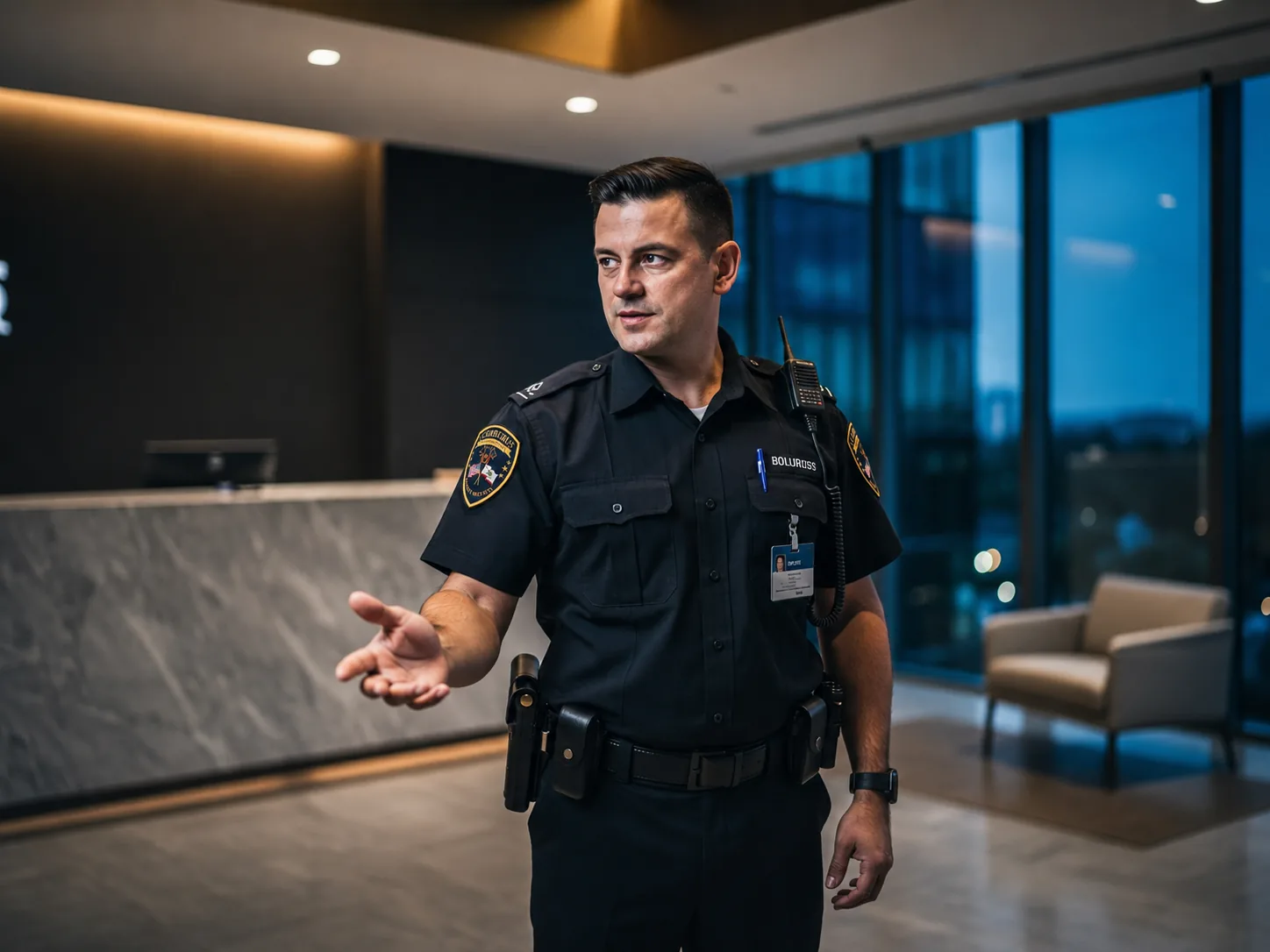
Armed security is a form of contracted protection in which a licensed officer carries a firearm while on duty. It is used at properties where the assessed risk is serious enough that an unarmed presence alone may not be sufficient, such as sites that handle large amounts of cash, valuable merchandise, or sensitive assets. Armed security is a capability, not a guarantee, and the decision to use it should follow a careful look at the actual risks of a property rather than a general preference for more visible protection. Understanding what the role does and does not include helps a business make that decision for the right reasons.
What Armed Means in a Security Context
An armed security officer is still a security officer. The uniform, the reporting duties, the access control work, and the focus on observation all remain. The difference is that the officer is authorized and trained to carry a firearm under California's licensing framework, which adds a layer of regulation and responsibility. Armed officers operate under written policies that describe when force may be considered and when it must not be, and those policies are one of the things a client should ask about before approving an armed post. The firearm does not replace the rest of the job; it changes the stakes of the situations the officer may face.
A Capability That Requires Planning
Armed coverage works best when it is planned around the site rather than simply added to a schedule. Planning covers where the officer is positioned, what the officer is responsible for observing, how incidents are escalated, how the officer coordinates with management, and how any use of force would be reviewed afterward. A firearm changes the stakes of every interaction, so clear expectations and supervision matter as much as the equipment itself. No security arrangement can promise that nothing will happen. The realistic goal is an informed, measured response that stays within the law and keeps the officer and the public as safe as the situation allows.
Where Armed Officers Are Used
- Banking and financial locations with cash handling and public counters
- Jewelry, cannabis, electronics, and other high-value retail environments
- Corporate and executive settings where a credible threat has been identified
- Warehouses and logistics sites storing high-value or regulated goods
- Construction and industrial sites with expensive equipment in isolated locations
Licensing and Oversight in California
California requires armed security officers to hold a firearms permit in addition to their guard registration, both issued through the Bureau of Security and Investigative Services. The process involves additional background review and training requirements set by the state, and permits must be kept current. The employing company must hold a Private Patrol Operator license, such as PPO 121682. Clients considering armed coverage should verify the license of the company and the permits of the officers assigned to the post, and should ask how the provider supervises armed posts and reviews incidents. Those questions are a normal part of arranging armed coverage, not an insult to the provider. It is also reasonable to ask what happens if an assigned officer is unavailable, how the provider maintains coverage without lowering its standards, and what requirements the officer must continue to meet to keep a firearms permit current. Clear answers to those questions are part of choosing an armed provider with confidence.
How Armed Differs From Unarmed
The practical difference between armed and unarmed security is the level of response the post can offer. Unarmed officers emphasize deterrence, access control, de-escalation, and reporting, and they call law enforcement when a situation exceeds their role. Armed officers add the ability to respond to an armed threat in the moment, at the cost of additional licensing, training, insurance, and oversight. For most properties, unarmed coverage is the better match, and armed coverage is reserved for sites whose risk profile calls for it. A provider should be willing to say when an unarmed post is the more appropriate choice, because that recommendation is a sign the assessment is genuine.
Review the full range of licensed security services we provide across California.
View Security Services →Related services and areas
Frequently asked questions
What does an armed security guard carry?
An armed officer carries a firearm in addition to the standard uniform, identification, and communication equipment. The specific weapon and any other equipment are governed by state requirements, company policy, and the client's post instructions.
Is an armed security guard the same as a police officer?
No. Armed security officers are private, licensed professionals, not sworn law enforcement. They do not have police powers. Their authority comes from state licensing and the same limited citizen's arrest rules that apply to the public.
What licenses does an armed security guard need in California?
An armed officer needs a security guard registration plus a firearms permit, both issued through the Bureau of Security and Investigative Services. The permits involve additional background review and state-set training requirements, and must be kept current.
Is armed security appropriate for a retail store?
It depends on the store. High-value or repeatedly targeted retail environments may justify armed coverage, while most stores are well served by unarmed loss prevention officers. The choice should follow a review of the store's risk, layout, and history rather than a blanket rule.
Does an armed guard make a property completely safe?
No security arrangement can promise that. Armed coverage is one layer of a broader approach that also includes lighting, access control, cameras, procedures, and staff awareness. It is most effective when those elements work together.