Insights & Updates
What Is Construction Site Security?
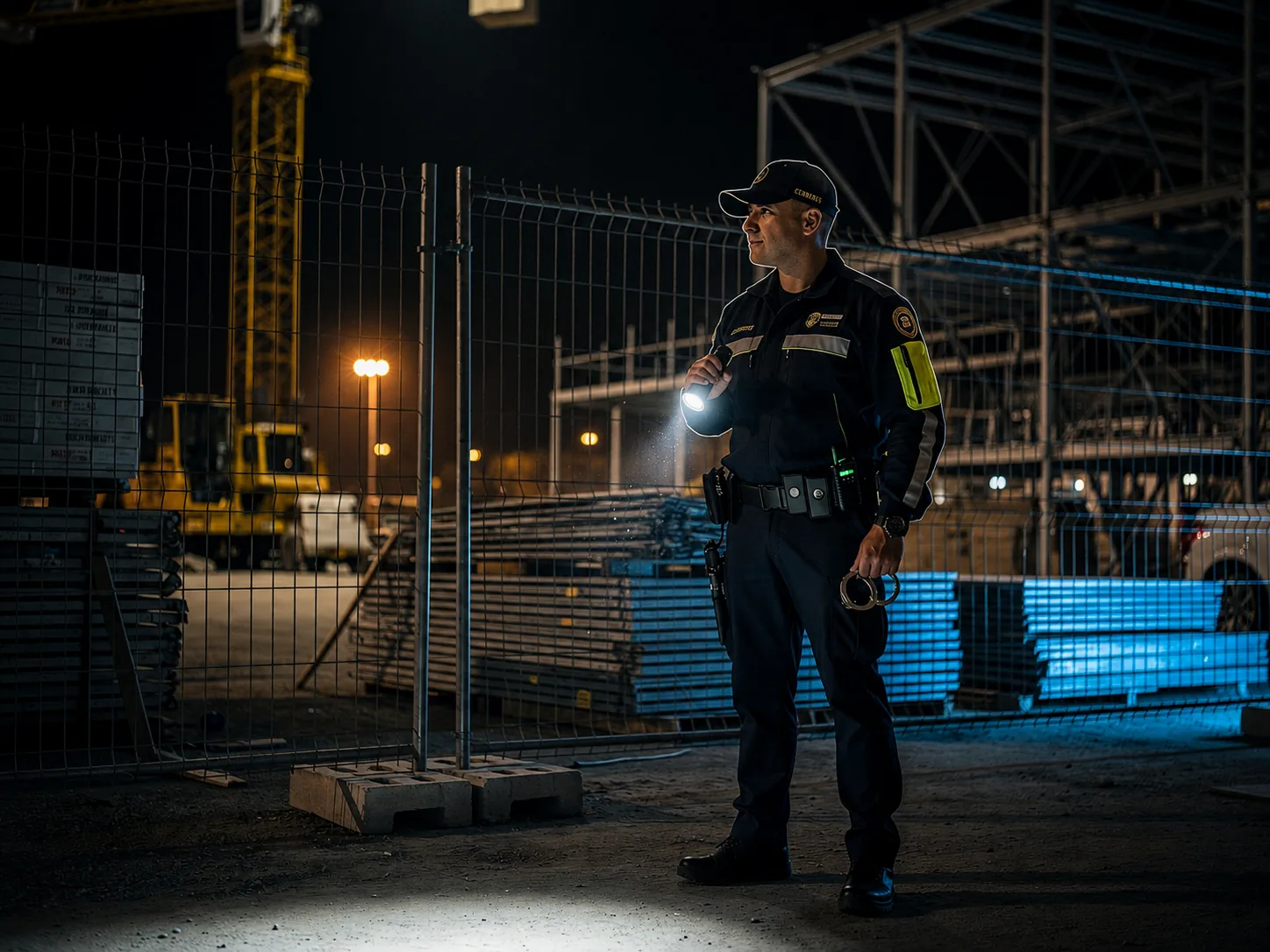
Construction site security protects an active job site's people, equipment, materials, and progress. Here is what it covers and how coverage is planned.
Construction site security is the protection of an active or idle job site, including its equipment, materials, tools, vehicles, and the partially finished structure itself. A construction site is unusual as a property because it changes almost every day. Fences move, gates open and close, deliveries arrive, crews rotate, and the site may be quiet for long stretches overnight and on weekends. Security has to be planned around that pace rather than around a fixed building layout. It also means the people who plan coverage should visit the site more than once, since a single walkthrough captures only one moment in a project that will keep changing.
Why Construction Sites Are Different From Finished Properties
A finished office building has stable entrances, established access control, and a predictable set of occupants. A construction site has none of that. There may be several gates used by different trades, temporary fencing that is easy to cut, limited permanent lighting, and valuable equipment parked on site because moving it every night is impractical. Those conditions create opportunity, and they mean security has to adapt as the project advances from one phase to the next.
What Construction Site Security Covers
- Access control: Monitoring gates, checking credentials, and keeping a record of who enters and leaves the site.
- Perimeter and patrol: Walking or driving the fence line, checking for breaches, and watching for activity after hours.
- Material and equipment checks: Observing storage areas, tool trailers, and equipment yards on a documented schedule.
- After-hours and weekend coverage: Staffing the hours when the site is empty and most exposed.
- Incident reporting: Recording what was seen, when, and what was done, so the project team has a factual record.
Stationary Officers, Mobile Patrol, or Both
Not every site needs the same shape of coverage. A dedicated officer at a single controlled gate suits sites that need continuous access control. A randomized mobile patrol suits larger sites with long perimeters or multiple entrances, where a visible vehicle at varied times covers more ground. Many projects combine the two, placing an officer on the main gate while a patrol checks the far fence line and the equipment yard during the shift. The right mix depends on the site's layout, its schedule, and what is stored there. It is also worth matching the post to the time of day. A site may need an officer at the gate during working hours to manage deliveries, then shift to patrol coverage once the crew leaves and the gates are locked. Reviewing that pattern with the provider keeps the plan aligned with how the site actually runs.
How Coverage Changes With the Project
Construction security is not set once and forgotten. In the early phase, a site may be mostly ground and heavy equipment, which calls for perimeter checks and equipment observation. As the structure rises, interior access and material storage become the priority. Near completion, the focus shifts to protecting installed finishes, fixtures, and systems. A security plan should be reviewed as those phases change, because a post that made sense in the first month may not match the site in the ninth.
Working With the Project Team
Effective construction security is coordinated with the general contractor, the site superintendent, and the subcontractors. Officers need to know the site rules, the approved entry points, the delivery schedule, and who is authorized to be on site at unusual hours. They also need a clear point of contact for reporting issues. When officers understand the project's own procedures, they support the schedule instead of interrupting it. That coordination also helps officers stay safe. A construction site contains hazards that change by the day, and officers who understand the site's safety plan, restricted areas, and emergency procedures can do their job without creating new risk for themselves or the crew.
Planning security for a construction project? Schedule a site walkthrough.
Schedule a Consultation →Related services and areas
Frequently asked questions
What does a construction site security guard do?
A construction security officer monitors access, patrols the perimeter, observes material and equipment storage, and documents activity on site. The specific duties are set by the project's layout, schedule, and procedures.
Why do construction sites need security after hours?
Sites are often empty overnight and on weekends while still holding tools, equipment, materials, and a partially finished structure. That combination makes after-hours a period of higher exposure, so it is when coverage is usually concentrated.
Is mobile patrol enough for a construction site?
Mobile patrol can suit large sites with long perimeters and fewer access points, because a vehicle covers more ground. Sites that need continuous gate control usually add a stationary officer. The right answer depends on the site.
Can construction security officers work at night and on weekends?
Yes. Construction security is typically scheduled around the project's working hours, which often means overnight, weekend, and holiday coverage when the site is unattended.
How is construction site security planned?
It starts with a walkthrough of the site: entrances, fencing, lighting, storage areas, and what is kept on site. From there, the provider proposes a mix of access control, patrol, and reporting that matches the project's phase and budget.